




Why is it in News?
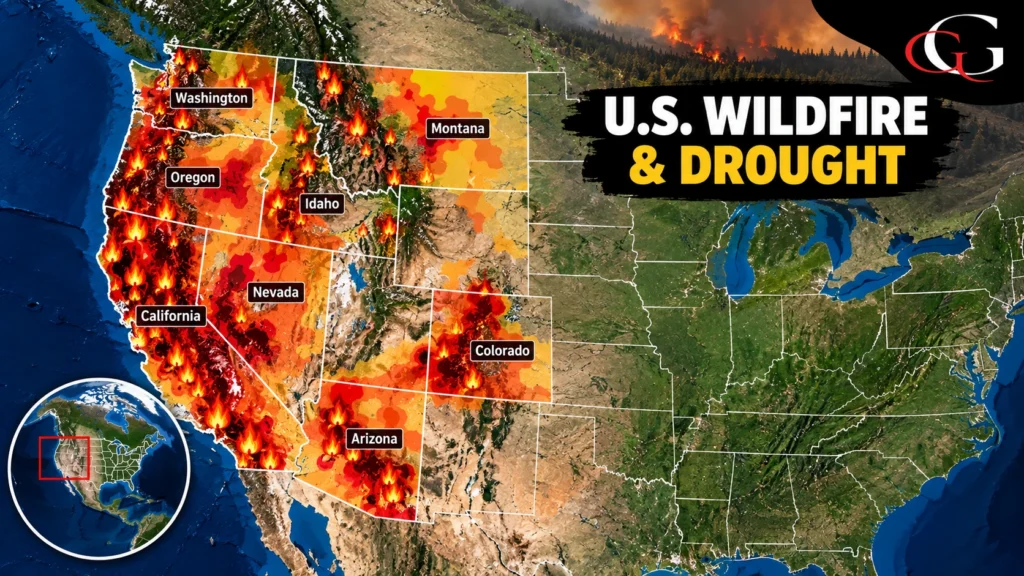
- The United States experienced its warmest June–August period on record in 2026, accompanied by below-normal precipitation. These conditions helped sustain widespread drought and contributed to a severe wildfire season.
- As of September 22, 2026, drought conditions covered 49.65% of the U.S. and Puerto Rico, while 42 states were experiencing Moderate Drought (D1) or worse.
- The National Interagency Fire Center reported that by September 21, 2026, more than 56,600 wildfires had burned over 8.5 million acres—146% of the 10-year average area burned by that date.
- Major western reservoirs, including Lake Mead and Lake Powell, reached extremely low levels during the drought, adding pressure to the region’s water resources.
About U.S. Wildfires and Drought
- Geographical concentration: The U.S. West is particularly vulnerable because large areas have dry climates, extensive forests and grasslands, and seasonal heat and wind.
- Why drought increases wildfire risk: Drought reduces soil moisture and dries grasses, shrubs and trees. These dry fuels can ignite more easily and allow fires to spread faster.
- Role of heat: High temperatures increase evaporation and atmospheric water demand, further drying vegetation and soils. When heat, low humidity and strong winds occur together, wildfire conditions can become more severe.
- Water resources: Prolonged drought reduces snowpack, streamflow and reservoir storage, creating challenges for agriculture, ecosystems and communities.
- Post-fire risks: Wildfire can also create secondary hazards. Burned landscapes are more vulnerable to erosion, debris flows and flash flooding when heavy rain occurs after a fire.
- Key geographical regions: California, the Pacific Northwest, the Great Basin, the Rocky Mountain region and parts of the Southern Plains can experience significant interactions between drought, heat and wildfire.
Frequently Asked Questions
1. Which part of the U.S. is most affected by drought and wildfires?
The Western United States is particularly exposed to wildfire and drought, although significant drought conditions can also occur in the Southern Plains, Southeast and other regions.
2. How does drought increase wildfire risk?
Drought dries vegetation and soils, creating more flammable fuels. Combined with heat, low humidity and wind, these conditions can increase the likelihood and spread of large wildfires.
3. Why are Lake Mead and Lake Powell important? Lake Mead and Lake Powell are major reservoirs of the Colorado River system. Their water levels are important for water supply, agriculture, ecosystems and communities across the U.S. Southwest


