






Why is it in News?
El Niño is strengthening rapidly in 2026 and is expected to become a very strong event by the end of the year. The World Meteorological Organization (WMO) says there is a near-100% likelihood that El Niño will persist through February 2027, while NOAA reports a greater than 90% chance of a very strong event during the Northern Hemisphere fall and winter.
The concern is particularly important for food security because El Niño changes rainfall, temperature and drought patterns across major agricultural regions.
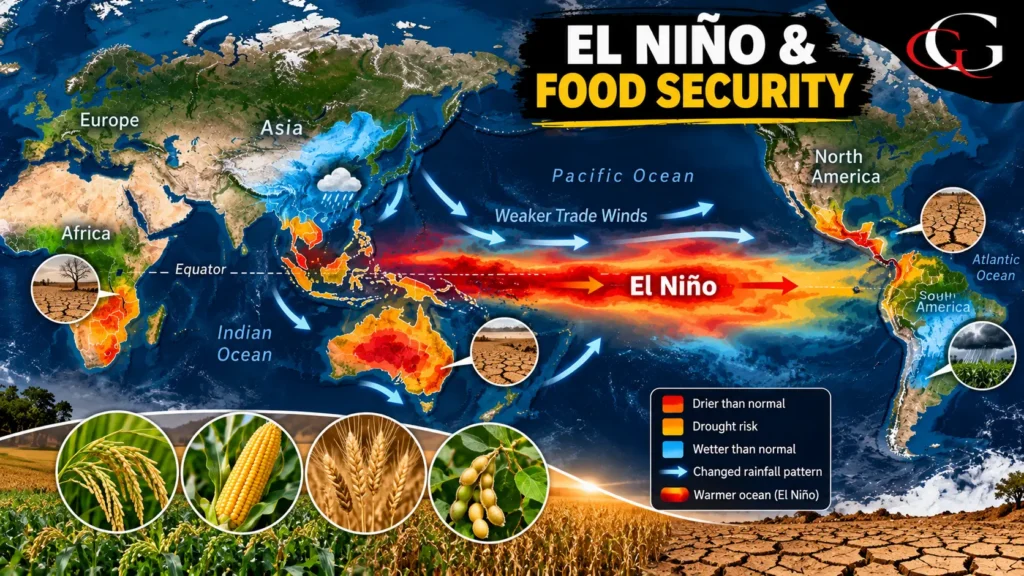
- The FAO identifies the Sahel, Southern Africa, South and Southeast Asia, Central America and the Caribbean as areas where El Niño-linked agricultural drought risk is particularly high.
- Southeast Asia is already experiencing water stress, wildfires and disruptions to agriculture and fisheries, raising concerns for globally important commodities such as rice and palm oil.
- The UN and WFP warn that droughts, floods and heat could increase food insecurity among vulnerable populations, with impacts potentially extending into 2027. How Could El Niño Affect Global Food Security?
El Niño is a periodic warming of the central and eastern tropical Pacific Ocean that alters atmospheric circulation and shifts rainfall and temperature patterns far beyond the Pacific.
1. Crop production could decline
Drought and extreme heat can reduce yields of rice, maize, wheat, soybean and other crops. FAO’s historical analysis shows particularly high drought risks across parts of Asia, Africa and Central America during strong El Niño events.
2. Rice supply could become vulnerable
Southeast Asia is a major rice-producing and exporting region. Reduced rainfall and high temperatures can affect irrigation, planting and yields, potentially tightening international supplies.
3. Fisheries may also be affected
El Niño changes ocean temperatures and marine ecosystems. Reduced fish availability in parts of the Pacific can affect both local food supplies and fishing-dependent communities.
4. Food prices could rise
Lower production does not automatically create a global food crisis, because countries have reserves, alternative suppliers and international trade. However, simultaneous production problems in several major exporting regions could increase commodity-price volatility. The current risks are occurring alongside elevated energy and fertilizer costs.
5. The impact will vary by region
El Niño does not produce the same effect everywhere. Some regions can experience drought while others receive unusually heavy rainfall. WMO also stresses that the strength of El Niño alone does not determine the severity of impacts in individual regions.
Frequently Asked Questions
1. What is El Niño?
El Niño is a periodic warming of the central and eastern tropical Pacific Ocean that influences weather patterns worldwide.
2. Which regions face high agricultural risk from El Niño in 2026?
Parts of South and Southeast Asia, Southern Africa, the Sahel, Central America and the Caribbean have been identified as areas of elevated drought or agricultural risk.
3. Will El Niño definitely cause a global food crisis?
No. El Niño increases weather and agricultural risks, but the actual food-security impact depends on regional rainfall, crop conditions, food stocks, trade, prices and governments’ preparedness.


