




Why is it in News?
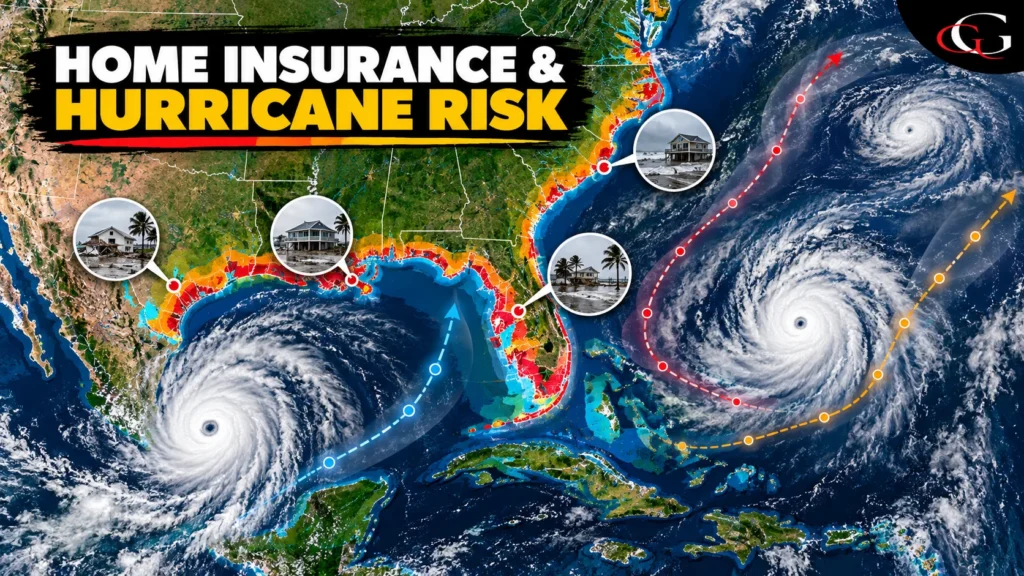
Homeowners insurance has become an important geography-and-finance issue in the U.S., particularly along hurricane-prone coastal regions.
A 2026 U.S. Government Accountability Office (GAO) analysis found that average U.S. homeowners-insurance premiums increased only about 3% after inflation between 2019 and 2024, but premiums in some disaster-prone areas—especially high-wind-risk coastal areas of the South—increased by 25% or more. GAO also found that homes in areas with severe or extreme wind risk had premiums about 58% higher than otherwise similar homes in areas with major wind risk
However, the trend is not uniform. In 2026, Florida has reported several approved homeowners-insurance rate decreases, while Louisiana has also seen some insurers reduce rates as reinsurance costs declined. The broader issue is how hurricane geography, disaster losses, rebuilding costs and insurance risk interact.
About U.S. Hurricane Insurance Geography
1. Coastal location increases wind risk
The U.S. Gulf Coast and Southeast are particularly exposed to hurricanes and tropical storms. Areas from Texas and Louisiana to Florida and the Carolinas face combinations of strong winds, storm surge and heavy rainfall. NOAA identifies the U.S. East and Gulf coasts among the principal areas covered by its hurricane warning system.
2. Higher disaster risk → higher expected losses
Insurance companies estimate the probability and potential cost of future claims. GAO found a strong association between higher wind risk and higher premiums. Recent disaster-related economic losses were also associated with higher premiums.
3. Reinsurance affects homeowner premiums
Insurance companies themselves purchase reinsurance to protect against extremely large catastrophe losses. When reinsurance becomes more expensive, those costs can feed into the economics of homeowners insurance. Louisiana’s insurance department specifically cited declining reinsurance costs as one factor behind a 7.5% average rate reduction by two insurers in 2026.
4. Rebuilding is expensive
After major hurricanes, demand for construction labor and materials can rise sharply. Higher replacement costs can therefore increase the amount insurers potentially have to pay for a damaged home.
5. Flood risk is a separate insurance issue
A hurricane can produce both wind damage and flooding, but standard homeowners policies generally do not cover flood damage. Flood insurance is usually purchased separately.
6. Risk is becoming a property-market issue
This creates a geographical feedback loop:
Coastal location → Hurricane exposure → Higher potential losses → Higher insurance risk → Higher premiums / reduced availability → Higher cost of owning property.
GAO also found that availability of private homeowners insurance has declined in some high-risk areas, with state-backed or “insurer of last resort” plans becoming more important
Frequently Asked Questions
1. Which U.S. regions face high hurricane-related insurance risk?
The Gulf Coast and southeastern Atlantic coast—including parts of Texas, Louisiana, Florida, Georgia, South Carolina and North Carolina—have substantial hurricane exposure.
2. Does homeowners insurance cover hurricane flooding?
Generally, no. Flood damage normally requires separate flood insurance.
3. Are insurance costs increasing everywhere in the U.S.?
No. GAO found much larger increases in certain disaster-prone areas, while some states and insurers have reported rate reductions in 2026.