






Why is it in News?
Climate risk is increasingly becoming a real-estate and financial risk in the United States. In 2026, new housing-market research is showing that exposure to hurricanes, floods and wildfires is already affecting the costs associated with owning property. A July 2026 Realtor.com analysis estimates that 23.1% of U.S. homes face severe or extreme wind, flood or wildfire risk, representing about $11.2 trillion in residential property value.
The U.S. Government Accountability Office (GAO) also found that homeowners-insurance premiums increased much faster in some disaster-prone areas. Between 2019 and 2024, premiums in parts of southern coastal states with high wind risk increased by 25% or more after inflation
A September 2026 Federal Reserve study provides another important link: analysis of 465,000 Florida home sales found that property-level expected weather losses, insurance premiums and hurricane exposure were negatively associated with home prices. The researchers found the strongest relationship with expected future weather losses. This means climate risk is increasingly becoming part of the geography of property value, insurance and housing affordability.
About Climate Risk and U.S. Real Estate
1. Risk is highly geographical
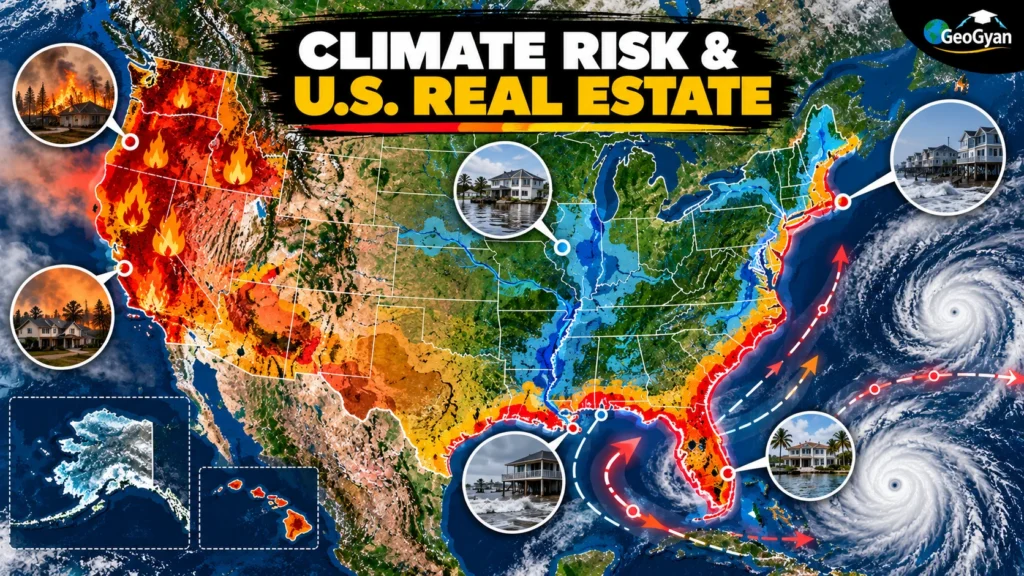
Climate risk is not evenly distributed across the United States.
- Florida and the Gulf Coast: hurricanes, storm surge and flooding
- California: wildfire, drought and some flood risks
- Southeast: hurricanes, flooding and severe wind
- Western U.S.: wildfire, drought and extreme heat
- River and coastal areas: flooding and sea-level-related risks
GAO found that homes in areas with severe or extreme wind risk had estimated insurance premiums about 58% higher than similar homes in areas with major wind risk.
2. Insurance is becoming part of property geography
A home may appear affordable based on its purchase price, but insurance, flood coverage, maintenance and disaster-mitigation costs can substantially change the total cost of ownership. GAO found that higher disaster risk is associated with both higher insurance premiums and reduced availability of private insurance in some areas.
3. Climate risk can influence property values
The Federal Reserve’s 2026 Florida study suggests that housing markets can incorporate expected future disaster losses into property prices.
FHFA has also noted that hurricanes, wildfires, floods and sea-level rise can damage housing, reduce property values and increase financial risks for homeowners and the broader housing-finance system. However, this does not mean every high-risk property automatically loses value. Location, amenities, employment, affordability and buyer preferences can offset or interact with climate risk.
4. A new geography of housing costs
Climate risk can create a chain:
Climate hazard → Property damage risk → Higher insurance/mitigation costs → Higher cost of ownership → Changes in demand and property valuation
Realtor.com’s 2026 research found that high-risk properties can still attract strong buyer interest in some markets, showing that people continue to trade off climate risk against factors such as affordability and location.
5. Why these matters for U.S. geography
The issue is therefore larger than insurance. Climate risk can influence where people build, where developers invest, which properties remain affordable, where insurance is available and how financial institutions assess mortgage risk. This could gradually create a more visible divide between high-risk and relatively lower-risk housing markets.
Frequently Asked Questions
1. Which U.S. areas are most exposed to climate-related real-estate risk?
Coastal Florida and the Gulf Coast face major hurricane and flood exposure, while parts of California and the western U.S. face significant wildfire and drought risks.
2. Does climate risk always reduce house prices?
No. The effect varies by location and type of risk. The Federal Reserve’s 2026 Florida research found a negative relationship between expected weather losses and home prices, but other factors such as amenities and housing demand also influence prices.
3. Why does climate risk matter to mortgage lenders?
Damage, inadequate insurance and falling property values can increase borrowers’ financial stress and potentially increase mortgage losses. FHFA identifies these as risks to the U.S. housing-finance system.