



Estimated reading time: 3 minutes
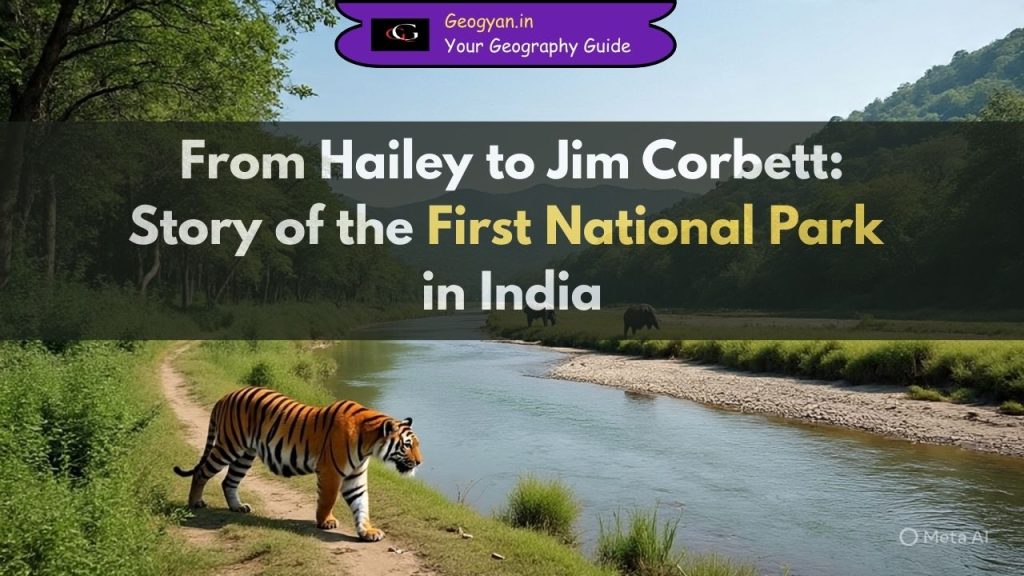
Table of contents
Why is the First National Park in India in News?
Recently, Jim Corbett National Park, which is the first national park in India, has been in the news due to rising tiger sightings and government initiatives for eco-tourism in Uttarakhand. As India moves towards sustainable development, this park has gained global attention for its role in wildlife conservation and tourism.
For UPSC, State PSC, SSC, and other exams, questions about the first national park in India are frequently asked, making this topic very important.
About the First National Park in India
- The first national park in India was established in 1936.
- Its present name is Jim Corbett National Park, located in Uttarakhand.
- Originally, it was called Hailey National Park, named after Sir Malcolm Hailey. Later, in 1952 it was renamed Ramganga National Park, and finally in 1957 it became Jim Corbett National Park, in memory of the legendary hunter-turned-conservationist Jim Corbett.
- It covers 520 sq. km core area, forming part of the Corbett Tiger Reserve (1288 sq. km).
- Known as the “Tiger Capital of India”.
Why is Jim Corbett Called the First National Park in India?
Jim Corbett was declared a national park in 1936, making it the earliest protected area under Indian law. It marked the beginning of structured wildlife conservation in India. Later, it also became the first Project Tiger Reserve in 1973.
Geographical Aspects of the Park
- Location: Nainital & Pauri Garhwal districts, Uttarakhand
- Altitude: 400–1200 m above sea level
- Geographical Zone: Shivalik Himalayas & Terai-Bhabar region
- River System: Ramganga River flows through the park, creating rich biodiversity.
- Soil Type: Alluvial and sandy loam, supporting sal forests and grasslands.
- Climate: Sub-tropical monsoon, with heavy rainfall in June–September.
Flora and Fauna
- Flora: Sal, Chir Pine, Khair-Sissoo, and grassland vegetation.
- Fauna:
- Big Cats → Royal Bengal Tiger, Leopard
- Herbivores → Chital, Sambar, Barking Deer, Elephants
- Birds → More than 600 bird species
- Reptiles → Crocodile, Gharial, King Cobra
This biodiversity makes it a hotspot of eco-tourism and conservation.
Why is the First National Park Important for Conservation?
- First park under Project Tiger (1973).
- Protects endangered species like tiger, gharial, and Asian elephant.
- Recognized under UNESCO’s World Network of Biosphere Reserves (2018) within the Nanda Devi Biosphere Reserve.
- Plays a crucial role in maintaining the ecological balance of the Terai-Himalayan region.
FAQs
Q1. Which is the first national park in India?
The first national park in India is Jim Corbett National Park, established in 1936 in Uttarakhand.
Q2. Why is Jim Corbett National Park famous?
It is famous for being the first national park in India, the first Project Tiger Reserve, and for its rich tiger population.
Q3. Which river flows through Jim Corbett National Park?
The Ramganga River flows through Jim Corbett, making it ecologically rich.
Q4. When was Jim Corbett renamed from Hailey National Park?
In 1957, it was renamed Jim Corbett National Park.
Q5. What is the geographical importance of Jim Corbett National Park?
It lies in the Shivalik Himalayas and Terai-Bhabar ecosystem, protecting endangered species and biodiversity.


One Response
Nice post… Knowledge full topic.. I like it