


Estimated reading time: 4 minutes
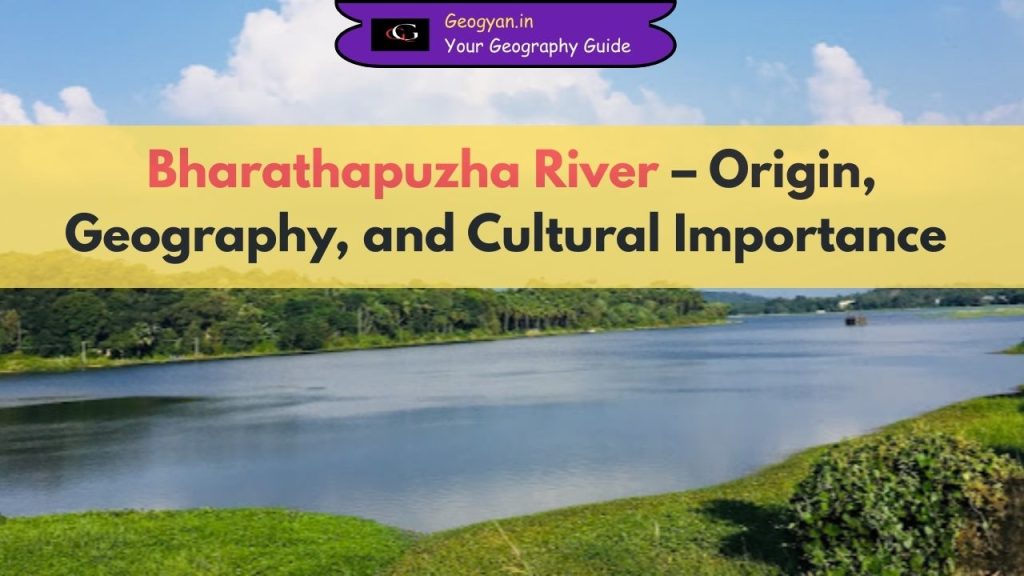
Table of contents
Why is Bharathapuzha River in News?
Recently, Bharathapuzha River, Kerala’s second-longest river, has been in the news due to severe sand mining issues, declining water levels, and cultural heritage debates. The Kerala government has initiated new steps to conserve the river while also focusing on sustainable development. Conservation activists have raised concerns that if corrective measures are not taken, the river may lose its ecological balance permanently.
About Bharathapuzha River?
The Bharathapuzha River, often called the Nila, is the second-longest river in Kerala after the Periyar.
- It stretches 209 km in length.
- Originates from the Anamalai Hills (Western Ghats), Tamil Nadu.
- Flows westwards and drains into the Arabian Sea at Ponnani, Malappuram district.
- The river plays a vital role in Kerala’s agriculture, culture, and water supply, making it a significant geographical topic. Its waters have nurtured civilizations, temples, and settlements for centuries.
Why is Bharathapuzha Called “Nila”?
Locally, Bharathapuzha is known as Nila, which means blue river in Malayalam.
- The name reflects the cultural identity and emotional bond of Malayali people with this river.
- Many Malayalam literary works, folk songs, and cultural festivals are linked to Nila.
- The river is called the “River of Imagination” because poets and writers often describe it as a source of inspiration. The cultural branding of Kerala’s identity is incomplete without mentioning the Nila.
Geographical Facts of Bharathapuzha River?
- Length: 209 km (2nd longest in Kerala).
- Drainage Basin: Covers an area of 6,186 sq km.
- Tributaries: Gayathripuzha, Kalpathipuzha, Thuthapuzha, Kunthipuzha.
- River System: Part of west-flowing rivers draining into the Arabian Sea.
- The river’s fertile alluvial plains make it crucial for paddy cultivation and rural livelihood. It is also a seasonal river, with heavy flow during monsoon and reduced flow in summer, which influences Kerala’s water management strategies.
What are the Environmental Issues of Bharathapuzha River?
- Excessive sand mining has damaged the riverbed.
- Declining water flow due to deforestation and urbanization.
- Pollution from untreated sewage and industrial waste.
- Seasonal dryness – during summer, large parts of the river dry up.
- These issues threaten both ecology and cultural heritage of the river. Environmentalists warn that the unchecked exploitation of Bharathapuzha can cause irreversible damage to Kerala’s river ecosystems.
What is the Cultural Importance of Bharathapuzha?
- Known as the “River of Malayalam Literature”.
- Several famous writers, poets, and Kathakali artists were born in the Bharathapuzha basin.
- The Thirunavaya Temple and Sukapuram Temple on its banks are major cultural landmarks.
- It is a traditional site for Hindu cremations.
- The river is not just water, but an emotional and spiritual lifeline for Kerala. Generations of Malayalis consider it a sacred river, with cultural festivals and rituals linked deeply to its waters.
Quick Exam Facts
- Second-longest River in Kerala – after Periyar.
- Total length: 209 km.
- Origin: Anamalai Hills, Tamil Nadu.
- Mouth: Arabian Sea at Ponnani.
- Nickname: Nila.
- Tributaries: Gayathripuzha, Kalpathipuzha, Thuthapuzha, Kunthipuzha.
- Cultural Hub: Associated with literature, music, and cremation rituals.
FAQs
Q1. What is the length of Bharathapuzha River?
The Bharathapuzha River is 209 km long, making it the second-longest river in Kerala. It is shorter only than the Periyar.
Q2. Where does Bharathapuzha River originate?
It originates from the Anamalai Hills in Tamil Nadu and flows into Kerala. The source is rich in biodiversity and receives heavy rainfall during monsoons.
Q3. Which sea does Bharathapuzha River drain into?
It drains into the Arabian Sea at Ponnani in Kerala, which is an important fishing and trading port.
Q4. Why is Bharathapuzha River culturally significant?
It is called the “Nila”, associated with Malayalam literature, temples, and rituals. Many cremation grounds and cultural festivals are located on its banks.
Q5. What are the major issues faced by Bharathapuzha River?
The river faces sand mining, pollution, and water scarcity during summers. Conservation projects are being launched to revive its natural flow.


